Early books captured without leaving their own room.
Digital reproduction of the early holdings of a library designated of exceptional cultural interest, carried out entirely on the institution’s premises.
A library designated of exceptional cultural interest by ministerial decree
- Designation of the collection
- Ministerial decree
- Movement of works
- None
- Place of work
- The library’s own rooms
In brief
- 01The situation
- The early holdings of a library designated of exceptional cultural interest, to be reproduced in full.
- 02The constraint
- The ministerial designation restricts movement: taking the volumes to an outside laboratory was not viable.
- 03The outcome
- The laboratory was installed on the premises. The volumes travelled between their own shelf and the copy stand, and no further.
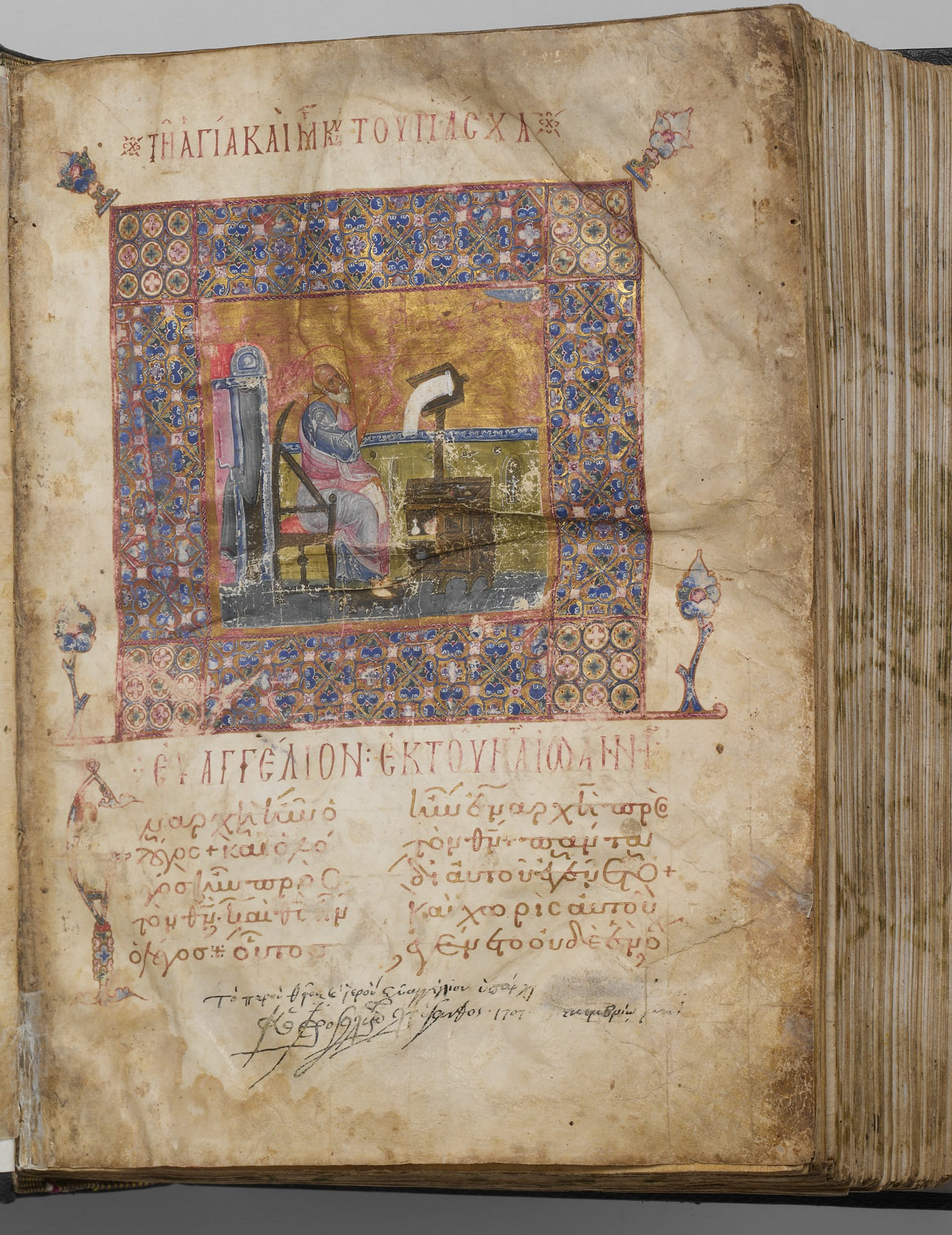
The constraint we started from
A designation of exceptional cultural interest places strict limits on moving the material. Transfer to an external laboratory, however well insured and supervised, would have required further authorisations and exposed the volumes to mechanical stress and to changes in temperature and humidity that no insurance compensates.
The work was therefore set up the other way round: not the work to the laboratory, but the laboratory to the work.
Installation on site
A suitable room was identified with the director: adequate floor area, floor loading, electrical supply and stability of ambient conditions. The capture stations were installed there — adjustable support cradles holding the opening angle, cold lighting free of ultraviolet and infrared components, continuous monitoring of temperature and relative humidity.
The volumes travelled the distance between their own shelf and the copy stand, and no further.
Colour management
A colour target was included in the frame at every session, so that the chromatic fidelity of each capture can be verified afterwards rather than being left to the operator’s recollection.
Master files were produced in a preservation format with embedded colour profile; access derivatives were generated automatically from the masters, which remain the sole reference.
Working with conservation
Some items were in a condition that made capture inadvisable without prior treatment. These were reported to the director and treated in collaboration with a specialist conservation studio before being photographed.
Condition reporting is part of the delivery: a reproduction campaign is also a condition survey of the collection, and the institution should receive it in writing.